
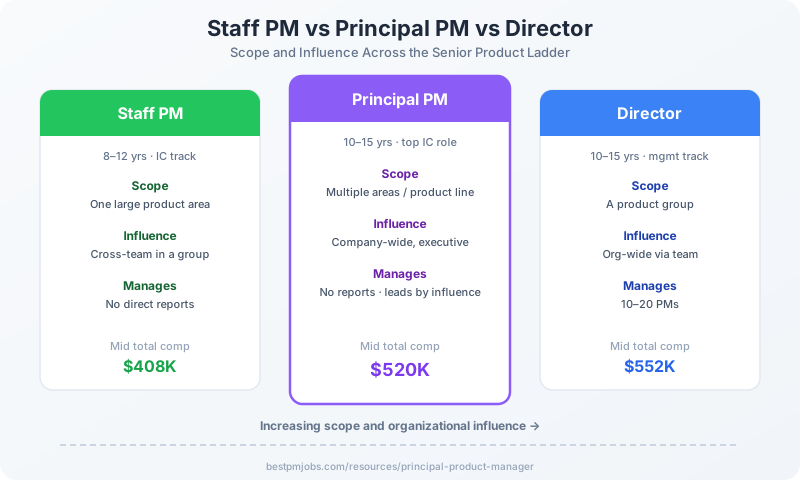
Staff PM vs Principal PM vs Director: Scope & Influence
Principal PM sits above Staff PM on the IC track and parallels the Director on scope, but leads through influence instead of managing people.
What is a Principal Product Manager?
A Principal Product Manager is the apex of the individual-contributor product career ladder. Where a Senior PM owns one product area and a Staff PM owns strategy for a large area, a Principal PM sets strategy across multiple areas or an entire product line. The Principal PM is trusted to make company-level product decisions and to shape work that many teams execute, all without the formal authority of a manager.
On most career frameworks, the IC track runs Associate PM, PM, Senior PM, Staff PM, Principal PM. The management track runs PM, Senior PM, Group PM or Director, VP, CPO. Principal Product Manager is the IC counterpart to the Director of Product Management: comparable seniority and compensation, different responsibilities. For the full ladder, see the PM career levels guide.
The defining trait of a Principal PM is leverage. A Principal PM produces outcomes far larger than any single team could by setting direction, establishing frameworks, and mentoring other PMs. Companies reserve the title for people who demonstrably raise the ceiling of the entire product organization.
What does a Principal Product Manager do?
- •Owns product strategy for a major product line or company-wide initiative that multiple teams execute against.
- •Defines multi-quarter and multi-year product vision and translates it into a prioritized roadmap.
- •Influences engineering, design, data, and go-to-market leaders to align on shared outcomes without direct authority.
- •Mentors Senior and Staff PMs, raising the quality bar for product thinking across the organization.
- •Makes high-stakes product trade-off decisions and presents recommendations to the executive team.
- •Identifies new market opportunities and builds the business case for major bets.
- •Establishes product standards, frameworks, and operating models that other PMs adopt.
Looking for PM jobs? Browse opportunities on bestpmjobs.com →
Principal PM vs Staff PM vs Director
Principal PM vs Staff PM
Staff PM and Principal PM are the two most senior individual-contributor levels. The difference is scope and influence, not whether either manages people (neither does). Learn more in the dedicated Staff PM vs Principal PM comparison or the Staff Product Manager guide.
| Aspect | Staff PM | Principal PM |
|---|---|---|
| Scope | One large product area | Multiple areas or a full product line |
| Influence | Cross-team within a group | Company-wide, executive-level |
| Mid total comp | $408,000 | $520,000 |
| Manages people | No | No |
| Years experience | 8–12 years | 10–15 years |
Principal PM vs Director of Product
Principal PM and Director of Product Management are parallel peaks on the IC and management tracks. They earn similar total compensation but differ on people management. See the full Director of Product Management guide.
| Aspect | Principal PM | Director of Product |
|---|---|---|
| Track | Individual contributor | People management |
| Direct reports | None | 10–20 PMs |
| Owns | Strategy and shipped outcomes | Team output, hiring, headcount |
| Mid total comp | $520,000 | $552,000 |
| Reports to | Director or VP of Product | VP of Product or CPO |
Required skills & qualifications
Product strategy
Sets multi-year direction for a product line and connects it to company goals.
Executive communication
Presents recommendations to VPs, the CPO, and the executive team with clarity.
Influence without authority
Aligns peer leaders and teams who do not report to the Principal PM.
Business and commercial judgment
Quantifies opportunity size, pricing impact, and revenue trade-offs.
Data fluency
Reads experiment results, defines metrics, and makes evidence-based decisions.
Mentorship
Coaches Senior and Staff PMs and improves the team’s product craft.
Qualifications at a glance
Salary & compensation
A Principal Product Manager earns a national mid base salary of $250,000 and total compensation (base plus equity plus bonus) of $315,000 to $1,050,000, with a national mid of about $520,000. The wide range reflects how much of Principal pay comes from equity, which varies by company stage and stock performance.
| Component | Low | Mid | High |
|---|---|---|---|
| Base salary | $200,000 | $250,000 | $300,000 |
| Total compensation | $315,000 | $520,000 | $1,050,000 |
Location adjusts base pay. Applying the San Francisco Bay multiplier of 1.35 to the mid base lifts it to about $337,500; New York at 1.30 gives about $325,000; a Remote-US role at 1.05 gives about $262,500. For full breakdowns and a calculator, see the Principal PM salary page.
Hiring at the Principal level?
Browse senior product manager openings at top tech companies on Best PM Jobs.
Find PM Jobs3,591+ active PM roles · $150K+ average salary
How to become a Principal Product Manager
Master the Senior PM craft
Ship measurable outcomes as a Senior Product Manager. Demonstrate that you can own a significant product area end to end and drive metrics that matter to the business.
Reach Staff PM and broaden scope
Move to Staff Product Manager by leading strategy for a large area and influencing teams beyond your own. Build a track record of cross-team impact.
Demonstrate company-level impact
Lead a company-wide initiative or product line where your strategy shapes the work of multiple teams. Quantify the revenue, retention, or efficiency you unlocked.
Build executive influence
Develop relationships with VPs and the CPO. Present strategy at the executive level and earn trust to set direction that the company adopts.
Mentor and raise the bar
Coach Senior and Staff PMs and establish frameworks others use. Principal is awarded for elevating the whole team, not just personal output.
Day in the life
A Principal PM spends less time in execution standups and more time on strategy, alignment, and mentorship. A typical day includes a strategy working session with a VP, a review of a Senior PM’s roadmap with coaching feedback, an analysis of an experiment that informs a company-level bet, and a written strategy memo for the executive team. The Principal PM still ships, but the unit of work is direction and leverage rather than individual features.
For a contrasting look at earlier-career days, see the day in the life of a PM.
Frequently asked questions
What is a Principal Product Manager?
A Principal Product Manager is the most senior individual-contributor (IC) product role at most technology companies. A Principal PM owns product strategy for a major product line or company-wide initiative, sets direction that multiple teams execute against, and operates with autonomy comparable to a Director without managing people. The level typically requires 10 to 15 years of product experience and reports to a Director of Product or VP of Product.
Is Principal PM higher than Staff PM?
Yes. Principal Product Manager sits one level above Staff Product Manager on the individual-contributor track. A Staff PM (mid total comp around $408,000) drives strategy for a single large area, while a Principal PM (mid total comp around $520,000) sets strategy across multiple areas or an entire product line and influences company-level decisions. Both are senior IC roles, but Principal carries broader scope and greater organizational influence.
How much does a Principal Product Manager earn?
A Principal Product Manager earns a national mid base salary of about $250,000 and total compensation (base plus equity plus bonus) ranging from $315,000 to $1,050,000, with a national mid of approximately $520,000. Total compensation varies widely with company stage, equity value, and location. In San Francisco the base multiplier is 1.35, lifting the mid base to roughly $337,500.
Does a Principal PM manage people?
No. A Principal Product Manager is an individual contributor and does not have direct reports. Instead of managing people, a Principal PM leads through influence: mentoring other PMs, setting strategy that teams adopt, and aligning engineering, design, and go-to-market leaders. This distinguishes the Principal track from the Director track, where the Director of Product Management manages a team of 10 to 20 PMs.
What is the difference between a Principal PM and a Director of Product?
The core difference is people management. A Principal Product Manager is a senior IC who owns strategy and ships outcomes personally, while a Director of Product Management manages a team of PMs, owns headcount and hiring, and is accountable for the output of an entire product group. Compensation overlaps heavily: Principal mid total comp is about $520,000 and Director mid total comp is about $552,000.
How long does it take to become a Principal PM?
Reaching Principal Product Manager typically takes 10 to 15 years of cumulative product experience. A common path is Associate PM, then PM, then Senior PM, then Staff PM, then Principal PM. Progression depends on demonstrating outsized, company-level impact and the ability to set strategy that other teams execute, not just years served.
What skills does a Principal Product Manager need?
A Principal Product Manager needs deep product strategy, executive communication, cross-functional influence without authority, strong product and business judgment, and the ability to mentor and raise the bar for other PMs. Technical fluency, data analysis, and the ability to navigate ambiguity at the company level are also expected at this level.
Should I aim for Principal PM or Director of Product?
Choose Principal Product Manager if you want to remain hands-on with strategy and product work and prefer influence over headcount. Choose Director of Product Management if you want to build and lead teams, own hiring, and grow other PMs. Both are senior, well-compensated levels; the decision is about whether you prefer the IC track or the management track.
About the Author

Aditi Chaturvedi
·Founder, Best PM JobsAditi is the founder of Best PM Jobs, helping product managers find their dream roles at top tech companies. With experience in product management and recruiting, she creates resources to help PMs level up their careers.