
Key Takeaways
| Metric | Figure | Notes |
|---|---|---|
| National average base | $98,000 | Across all experience levels in the U.S. |
| Entry / junior range | $72,000 | 0-2 years of product owner experience |
| Mid-level (typical) | $105,000 | 3-5 years owning a backlog |
| Senior product owner | $135,000 | 6+ years, complex or multi-team scope |
| Pay vs. Product Manager | 10-20% lower | At equivalent years of experience |
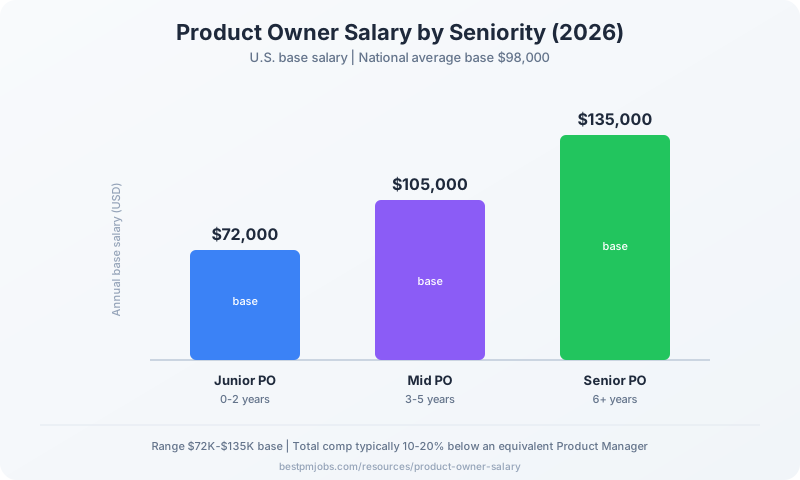
Product Owner Salary by Seniority (2026)
U.S. base salary climbs from $72,000 for junior product owners to $135,000 for senior product owners.
How Much Does a Product Owner Earn?
A product owner earns about $98,000 in base salary on average in the United States in 2026. The full range spans $72,000 at the entry level to $135,000 for senior product owners. Mid-level product owners earn around $105,000 base. Total compensation, which adds bonus and any equity, typically runs $8,000 to $25,000 above base depending on level and company stage.
A product owner is the person accountable for a product backlog inside an agile team. The product owner prioritizes work, writes user stories, defines acceptance criteria, and decides what the engineering team builds next. Because the role centers on backlog execution rather than full product strategy, product owner pay sits below product manager pay, but above most individual-contributor delivery roles.
The three factors that move product owner pay the most are experience, location, and industry. The sections below give the actual dollar figures for each. For a wider view of product compensation across every level, see the PM salary guide or estimate your own number with the PM salary calculator.
Product Owner Salary by Experience
Experience is the clearest driver of product owner pay. The table below shows base and approximate total compensation at each level, followed by what the role owns.
| Level | Experience | Base Salary | Total Comp |
|---|---|---|---|
| Junior Product Owner | 0-2 years | $72,000 | $80,000 |
| Mid-Level Product Owner | 3-5 years | $105,000 | $120,000 |
| Senior Product Owner | 6+ years | $135,000 | $160,000 |
Junior Product Owner
0-2 years$72,000 baseOwns a single team backlog under close guidance. Writes user stories, runs refinement, and clarifies acceptance criteria for one squad.
Mid-Level Product Owner
3-5 years$105,000 baseOwns a full product area end to end. Prioritizes the backlog independently, balances stakeholder requests, and reports on sprint outcomes.
Senior Product Owner
6+ years$135,000 baseOwns a complex or multi-team backlog. Sets release strategy, coaches junior product owners, and aligns several squads to one roadmap.
Looking for PM jobs? Browse opportunities on bestpmjobs.com →
Product Owner Salary by Location
Location applies a multiplier to the $98,000 national average base. The figures below show the actual base salary for the average product owner in each market.
| Location | Multiplier | Average Base |
|---|---|---|
| San Francisco Bay Area | 1.35x | $132,300 |
| New York City | 1.30x | $127,400 |
| Seattle | 1.25x | $122,500 |
| Boston / Los Angeles | 1.15x | $112,700 |
| Austin / Remote (U.S.) | 1.05x | $102,900 |
| Chicago / Denver | 1.00x | $98,000 |
| Atlanta / Dallas / Houston | 0.95x | $93,100 |
| Other U.S. metros | 0.90x | $88,200 |
The location spread is about $44,000
A product owner in the San Francisco Bay Area earns about $132,300 base, while the same role in a lower-cost metro earns about $88,200. That is a $44,100 difference for identical work, which is why location is worth weighing against cost of living before accepting an offer.
Product Owner Salary by Industry
Industry shifts product owner base pay by up to $22,000. Regulated and platform-heavy industries pay the most because their backlogs demand domain expertise.
| Industry | Average Base | Why |
|---|---|---|
| Finance & Fintech | $112,000 | Regulated backlogs and compliance pressure lift pay. |
| Enterprise SaaS | $108,000 | Strong demand for product owners on platform teams. |
| Healthcare & Health Tech | $104,000 | Domain knowledge and HIPAA scope raise base pay. |
| E-commerce & Retail | $98,000 | Sits near the national average across most roles. |
| Government & Public Sector | $92,000 | Stable demand but lower ceilings than private tech. |
| Agencies & Consulting | $90,000 | Billable structures keep base pay below in-house roles. |
Product Owner vs Product Manager Pay
Product owners earn 10-20% less than product managers at the same experience level. The product manager owns strategy, discovery, and outcomes across the full product, while the product owner concentrates on backlog execution within a team. The table below shows the base-pay gap in dollars at each level.
| Level | Product Owner Base | Product Manager Base | Gap |
|---|---|---|---|
| Entry / Junior | $72,000 | $85,000 | $13,000 (15%) |
| Mid-level | $105,000 | $125,000 | $20,000 (16%) |
| Senior | $135,000 | $160,000 | $25,000 (16%) |
For a side-by-side look at the two roles, including responsibilities and career paths, read the product manager vs product owner comparison.
Hiring for a Higher-Paying Product Role?
Product owner and product manager roles at top companies are open now. Browse current openings and compare offers on Best PM Jobs.
Find PM Jobs3,591+ active PM roles · $150K+ average salary
Factors That Affect Product Owner Pay
Scope of the backlog
Owning one squad pays less than owning a multi-team platform backlog. Product owners who coordinate several squads earn 15-25% more than single-team owners.
Industry and domain
Finance, fintech, and healthcare pay $6,000 to $14,000 above the national average because regulated backlogs demand domain expertise.
Location
A Bay Area product owner earns about $132,300 base versus $88,200 in a lower-cost metro for the same work, a difference of roughly $44,000.
Certifications
A Certified Scrum Product Owner (CSPO) or SAFe Product Owner credential adds $4,000 to $8,000 to base offers, especially at enterprises that standardize on a framework.
Technical depth
Product owners who can read APIs, write detailed acceptance criteria, and work directly with engineers command higher offers than those who only manage a list of requests.
How to Increase Product Owner Pay
The five steps below are ordered by impact, from the largest single jump to the steadiest long-term gain.
Move from one squad to a platform backlog
Take ownership of a backlog that several teams depend on. Multi-team scope is the single largest jump, often worth $15,000 to $30,000 in base pay.
Earn a recognized certification
Complete a CSPO or SAFe Product Owner / Product Manager certification to add $4,000 to $8,000 and qualify for enterprise roles that require it.
Build measurable outcomes into your resume
Replace task lists with results: cycle time cut from 14 to 7 days, defect rate down 40%, or release frequency doubled. Outcome data supports a higher offer.
Specialize in a high-paying domain
Develop fintech, healthcare, or data-platform expertise. Domain specialists earn $6,000 to $14,000 more than generalist product owners.
Transition toward a product manager track
Take on discovery, strategy, and roadmap ownership. Moving from product owner to product manager closes the 10-20% pay gap and opens a higher ceiling.
Frequently Asked Questions
Pay Levels
How much does a product owner earn in 2026?
A product owner earns about $98,000 in base salary on average in the United States in 2026. Pay ranges from roughly $72,000 for entry-level and junior product owners to $135,000 for senior product owners. Mid-level product owners with 3-5 years of experience typically earn around $105,000 base.
What is the difference between a junior and senior product owner salary?
A junior product owner with 0-2 years of experience earns about $72,000 base, while a senior product owner with 6+ years earns about $135,000 base. That is a difference of $63,000, driven mainly by backlog scope: junior product owners support one squad, while senior product owners coordinate multiple teams and set release strategy.
Location & Industry
Does location change product owner pay?
Yes. Location is one of the largest pay factors. A product owner in the San Francisco Bay Area earns about $132,300 base (a 1.35x multiplier on the $98,000 national average), versus about $88,200 in a lower-cost metro (0.90x). New York City pays about $127,400 and Seattle about $122,500.
Do product owners earn less than product managers?
Generally yes. At equivalent experience, product owners earn 10-20% less than product managers. For example, a senior product owner earns about $135,000 base versus about $160,000 for a senior product manager, a gap of roughly $25,000. The difference reflects the product manager's broader ownership of strategy, discovery, and outcomes.
Which industries pay product owners the most?
Finance and fintech pay the most at about $112,000 base, followed by enterprise SaaS at $108,000 and healthcare at $104,000. These industries pay above the $98,000 national average because regulated backlogs and domain complexity require deeper expertise.
Growing Your Pay
How can a product owner increase their salary?
The fastest increases come from taking on a multi-team platform backlog (worth $15,000-$30,000), earning a CSPO or SAFe certification ($4,000-$8,000), specializing in a high-paying domain like fintech or healthcare ($6,000-$14,000), and documenting measurable outcomes. Transitioning toward a product manager role closes the 10-20% pay gap entirely.
Does a Scrum Product Owner certification raise pay?
A Certified Scrum Product Owner (CSPO) or SAFe Product Owner certification adds about $4,000 to $8,000 to base offers. The effect is strongest at enterprises that standardize on Scrum or SAFe and list the certification as a requirement for the role.
About the Author

Aditi Chaturvedi
·Founder, Best PM JobsAditi is the founder of Best PM Jobs, helping product managers find their dream roles at top tech companies. With experience in product management and recruiting, she creates resources to help PMs level up their careers.