
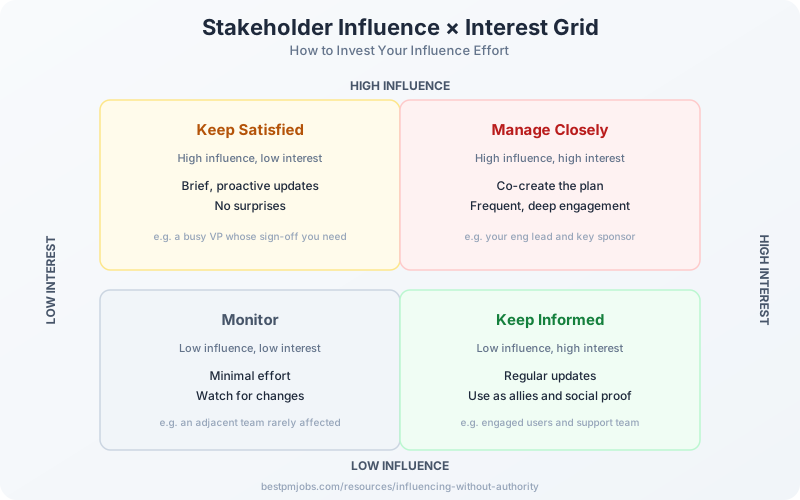
Stakeholder Influence × Interest Grid
Plot each stakeholder by influence and interest to decide who to manage closely, keep satisfied, keep informed, or monitor.
The product manager sits at the center of a cross-functional team with responsibility for the outcome and almost no formal authority over the people who produce it. The tactics in this guide are the levers that close that gap. They range from planning tools that direct your effort, to persuasion techniques that lower the cost of agreement, to the trust that makes every other tactic work.
Looking for PM jobs? Browse opportunities on bestpmjobs.com →
Why PMs Need It
You own the outcome, not the people
A product manager is accountable for product results but usually has zero direct reports, so orders are not an option.
Every release is cross-functional
Shipping requires engineering, design, data, marketing, and sales to align, none of whom the PM manages.
Executives decide the big bets
Strategy and funding sit above the PM, so the PM must persuade leaders rather than direct them.
Influence scales with seniority
As PMs move toward senior and leadership roles, the share of work done through influence rather than authority grows.
The Tactics
Cialdini's Six Principles
What it is
Six research-backed levers of persuasion: reciprocity, commitment and consistency, social proof, authority, liking, and scarcity. Applied ethically, they make a reasonable request easier to say yes to.
When to use it
Use when you have a sound proposal and need to lower the friction of agreement.
Steps
- Build goodwill in advance so reciprocity is genuine, not transactional.
- Secure a small early commitment that the larger ask is consistent with.
- Cite peers who already adopted the approach as social proof.
- Demonstrate relevant expertise, build rapport, and be clear about real constraints.
Example
A PM gets a reluctant team to try a new process by noting two peer teams already use it (social proof) and proposing a two-week trial (small commitment).
Stakeholder Mapping
What it is
A method that plots affected people by their influence and interest, telling you who to manage closely, keep satisfied, keep informed, or monitor. It directs your effort to the people who can make or break a decision.
When to use it
Use at the start of any initiative that needs cross-functional buy-in.
Steps
- List everyone affected by or able to affect the decision.
- Plot each person by influence (high or low) and interest (high or low).
- Manage high-influence, high-interest people closely; keep high-influence, low-interest people satisfied.
- Keep low-influence, high-interest people informed and monitor the rest.
Example
A PM identifies the head of sales as high-influence but low-interest, so the PM keeps them satisfied with brief updates rather than long reviews.
RACI
What it is
A responsibility model that labels each person as Responsible, Accountable, Consulted, or Informed for a piece of work. It removes ambiguity about who does the work, who owns it, and who merely needs updates.
When to use it
Use when work spans several teams and ownership is unclear.
Steps
- List the tasks or decisions in the initiative.
- Assign exactly one Accountable owner per item.
- Assign who is Responsible for doing the work.
- Mark who must be Consulted and who is only Informed.
Example
For a launch, engineering is Responsible, the PM is Accountable, legal is Consulted, and the wider company is Informed.
Narrative-Driven Influence
What it is
A technique that frames a proposal as a clear story: the customer problem, why it matters now, the options, and the recommended path. A narrative makes a decision memorable and easy to repeat to others.
When to use it
Use when you need a proposal to spread beyond the room where you present it.
Steps
- Open with the customer problem and the cost of not solving it.
- Present the options honestly, including doing nothing.
- Recommend a path and explain the trade-offs you accepted.
- End with the specific decision you are asking for.
Example
A PM writes a one-page narrative that a director forwards unchanged to the executive team, who approve the bet without the PM in the room.
Trust and Credibility
What it is
The compounding asset built by delivering on commitments and being honest about trade-offs. High trust lets you spend less effort persuading because people extend you the benefit of the doubt.
When to use it
Build continuously; it is the foundation every other tactic relies on.
Steps
- Make commitments you can keep and track them visibly.
- Report bad news early and own mistakes.
- Give credit to others and share context generously.
- Be consistent so people can predict how you will act.
Example
Because a PM flagged a slipping date two weeks early, leadership trusts the next estimate and approves the plan without extra scrutiny.
Data-Backed Persuasion
What it is
Using a relevant metric, customer quote, or experiment result to move a debate from opinions to shared facts. It gives skeptics a reason to agree that does not depend on your title.
When to use it
Use when a decision is contested and the disagreement is about facts, not values.
Steps
- Identify the specific objection or open question.
- Find the smallest piece of evidence that addresses it directly.
- Pair the evidence with a short narrative explaining why it matters.
- Offer a low-risk experiment when the data is still ambiguous.
Example
A PM resolves a debate over a feature by showing a 12 percent lift from a one-week experiment, converting a skeptic into a supporter.
Influence Is a Career-Defining Skill
Companies pay for product managers who can align teams without authority. Browse open roles.
Find PM Jobs3,591+ active PM roles · $150K+ average salary
How to Influence Without Authority
Understand their goals
Before arguing, learn what each stakeholder is measured on and what they are worried about.
Map the stakeholders
Plot who has influence and interest, and decide how much effort each person needs.
Build shared goals
Frame the proposal in terms of outcomes the other person already cares about.
Bring evidence
Pair a relevant metric, customer quote, or experiment result with a short narrative.
Offer a small first step
Ask for a reversible trial rather than full commitment, lowering the cost of saying yes.
Escalate cleanly if needed
If you still disagree, present both options and trade-offs to a shared decider rather than repeating the fight.
Influence supports decisions, not replaces them
Scenario Cheat Sheet
| Scenario | Recommended move | Why |
|---|---|---|
| An engineering lead resists the scope | Data-backed persuasion + small step | Show the metric behind the scope and propose a trial slice. |
| A senior stakeholder disagrees in a meeting | Understand goals, then narrative | Frame the proposal around what they are measured on. |
| Nobody owns a cross-team decision | RACI | Assign a single Accountable owner. |
| A high-influence VP keeps getting surprised | Stakeholder mapping | Keep them satisfied with proactive brief updates. |
| A team is reluctant to adopt a new process | Cialdini: social proof + commitment | Cite peer teams and propose a two-week trial. |
| Your proposal dies after you leave the room | Narrative-driven influence | Write a one-pager others can forward unchanged. |
| Leadership doubts your time estimate | Trust and credibility | Point to past commitments you kept and flagged early. |
| Two teams want incompatible features | Shared goals + clean escalation | Surface the common objective, then take trade-offs to a decider. |
| A skeptic blocks an experiment | Data-backed persuasion | Offer a low-risk test to settle the disagreement with facts. |
| Sales pushes a one-off custom request | Narrative + data | Show the cost to the roadmap and reframe around shared revenue goals. |
Common Mistakes
Leading with your conclusion
Fix: Ask about their goals first, then frame your proposal around them.
Treating influence as a one-time pitch
Fix: Build trust continuously so each request starts from a higher base.
Bringing data with no narrative
Fix: Pair every number with a short story explaining why it matters.
Ignoring low-interest, high-influence people
Fix: Keep them satisfied with proactive, concise updates.
Fighting the same battle repeatedly
Fix: Escalate cleanly with both options and trade-offs to a shared decider.
Asking for full commitment up front
Fix: Offer a small reversible first step to lower the cost of yes.
Frequently Asked Questions
What is influencing without authority?
Influencing without authority is the ability to drive decisions and outcomes through people you do not manage and cannot direct. Product managers rely on it because they are accountable for product results but rarely have engineers, designers, marketers, or executives reporting to them. It works through credibility, shared goals, persuasion, and trust rather than through a chain of command, so the people involved choose to act rather than being told to.
Why do product managers need to influence without authority?
Product managers sit at the center of a cross-functional team but usually have no direct reports. To ship anything, they must align engineering, design, data, marketing, sales, and leadership, none of whom they manage. Authority would let them issue orders; influence lets them earn agreement. Because the product manager owns the outcome but not the people, influence is the primary mechanism by which the job gets done.
What are Cialdini's six principles of influence?
Robert Cialdini identified six principles: reciprocity (people return favors), commitment and consistency (people act in line with prior commitments), social proof (people follow what peers do), authority (people defer to credible experts), liking (people say yes to those they like), and scarcity (people value what is limited). Product managers apply them ethically by building goodwill, securing small early agreements, citing peer adoption, demonstrating expertise, building rapport, and being clear about real constraints.
How do you influence a senior stakeholder who disagrees with you?
Start by understanding the stakeholder's goals and concerns before arguing your case. Frame your proposal in terms of the outcomes they care about, bring data that addresses their specific objection, and offer a small reversible step rather than asking for full commitment at once. If you still disagree, escalate cleanly by presenting both options and the trade-offs to a shared decider, rather than fighting the same battle repeatedly.
What is stakeholder mapping and how does it help with influence?
Stakeholder mapping plots the people affected by a decision on two axes, usually their level of influence and their level of interest. The map tells you who to manage closely, who to keep satisfied, who to keep informed, and who needs only minimal effort. It prevents two common mistakes: over-investing in low-influence parties and being surprised by a high-influence stakeholder you failed to engage early.
How does data help with influence?
Data shifts a debate from competing opinions to a shared set of facts, which is especially useful when you lack authority. A relevant metric, a customer quote, or the results of a small experiment gives skeptics a reason to agree that does not depend on your title. The most persuasive product managers pair data with a clear narrative, because numbers alone rarely move people without a story that explains why the numbers matter.
What is the most common mistake when influencing without authority?
The most common mistake is leading with your conclusion before understanding the other person's goals. When you argue for your solution first, stakeholders defend their position and the conversation becomes a contest. Effective influencers ask questions, surface shared goals, and frame proposals in terms of what the other person needs, so agreement feels like a joint decision rather than a concession.
Can you build influence quickly, or does it take time?
Trust and credibility compound over time, so deep influence is built gradually through delivering on commitments and being honest about trade-offs. That said, you can create influence in a single interaction by preparing well: understanding the stakeholder's goals, bringing relevant data, and offering a low-risk first step. The fast wins and the slow compounding reinforce each other, because each kept commitment makes the next request easier.
About the Author

Aditi Chaturvedi
·Founder, Best PM JobsAditi is the founder of Best PM Jobs, helping product managers find their dream roles at top tech companies. With experience in product management and recruiting, she creates resources to help PMs level up their careers.