
Key Takeaways
| Aspect | Detail |
|---|---|
| What it is | A one-page document that defines product direction and how to measure it. |
| Six sections | Vision, goals, target market, positioning, initiatives, and metrics. |
| Best used | At the start of a planning cycle, before building a roadmap. |
| Time to fill | About 60-90 minutes once inputs are gathered. |
| Pairs with | A roadmap and OKRs that turn the strategy into execution. |
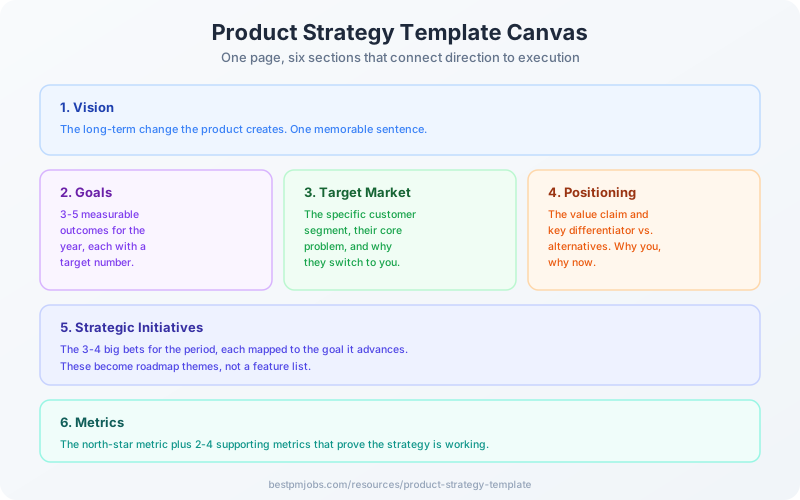
Product Strategy Template Canvas
The six sections laid out as a single page, from vision at the top to metrics at the bottom.
What Is a Product Strategy Template?
A product strategy template is a one-page document that captures the core decisions behind a product in a fixed structure. Instead of a long narrative, the template forces each decision into a named section: vision, goals, target market, positioning, strategic initiatives, and metrics. The result is a single reference the whole team can read in two minutes and align around.
The template is deliberately short. A one-page constraint keeps each section sharp: one vision sentence, three to five goals, three to four initiatives. When a section runs long, the underlying decision usually has not been made yet, and the template surfaces that gap early.
The template is a companion to the product strategy frameworks guide. The frameworks help you think through each decision; the template is where you record the conclusions.
What the Template Includes
A complete product strategy template includes six sections, ordered from the broadest direction to the most concrete measurement. Each section answers one question and feeds the next.
| # | Section | Answers |
|---|---|---|
| 1 | Vision | The long-term change the product creates in the world. |
| 2 | Goals | Three to five measurable outcomes for the planning period. |
| 3 | Target Market | The specific customer segment and the core problem they have. |
| 4 | Positioning | The value claim and the key differentiator versus alternatives. |
| 5 | Strategic Initiatives | The three to four big bets that advance the goals. |
| 6 | Metrics | The north-star metric plus supporting metrics that prove the strategy works. |
The Six Template Sections
Each section below lists its purpose, the prompt to answer when filling it, and a short worked example from a fictional cafe-software company.
Vision
The long-term change the product creates in the world.
Prompt: In one sentence, what does the world look like if this product fully succeeds?
Example: Independent cafes run as smoothly as the largest chains, without hiring an operations team.
Goals
Three to five measurable outcomes for the planning period.
Prompt: What specific, numbered results will prove progress toward the vision this year?
Example: Reach 5,000 paying cafes, lift net revenue retention to 115%, and cut onboarding time to under one day.
Target Market
The specific customer segment and the core problem they have.
Prompt: Who exactly are you serving, what problem do they have, and why do they switch to you?
Example: Owner-operated cafes with 1-3 locations who lose hours each week reconciling inventory by hand.
Positioning
The value claim and the key differentiator versus alternatives.
Prompt: Why should the target customer choose this product over the alternatives, and why now?
Example: The only inventory tool built for single-owner cafes that sets up in under an hour with no consultant.
Strategic Initiatives
The three to four big bets that advance the goals.
Prompt: What are the few large efforts that will move the goals, and which goal does each serve?
Example: Self-serve onboarding flow, supplier auto-ordering, and a mobile counts app, each mapped to a goal.
Metrics
The north-star metric plus supporting metrics that prove the strategy works.
Prompt: What single metric best captures value delivered, and which two to four support it?
Example: North star: weekly active cafes. Supporting: activation rate, retention, and average revenue per cafe.
Looking for PM jobs? Browse opportunities on bestpmjobs.com →
A Filled Example
The example below shows the complete template filled in for BrewOps, a fictional inventory tool for independent cafes. Read it top to bottom to see how each section builds on the one above it.
BrewOps Product Strategy
One-page strategy for a fictional cafe inventory product
Vision
Independent cafes run as smoothly as the largest chains, without hiring an operations team.
Goals
Reach 5,000 paying cafes, lift net revenue retention to 115%, and cut onboarding time to under one day, all by the end of the year.
Target Market
Owner-operated cafes with 1-3 locations who currently lose 4-6 hours a week reconciling inventory and supplier orders by hand.
Positioning
BrewOps is the only inventory and ordering tool built for single-owner cafes that sets up in under an hour, with no consultant and no spreadsheet migration.
Strategic Initiatives
Self-serve onboarding flow (serves onboarding-time goal), supplier auto-ordering (serves retention goal), and a mobile counts app (serves the 5,000-cafe growth goal).
Metrics
North-star metric: weekly active cafes. Supporting metrics: activation rate, 90-day retention, and average revenue per cafe.
Notice how every initiative maps to a goal
In the BrewOps example, each of the three initiatives names the goal it advances. This mapping is the test of a sound strategy: if an initiative serves no goal, it does not belong on the page. Apply the same check to your own template before you build a roadmap from it.
Put Product Strategy to Work in a New Role
Strong product strategy skills are what hiring teams look for. Browse open product manager and product leadership roles on Best PM Jobs.
Find PM Jobs3,591+ active PM roles · $150K+ average salary
How to Use the Template
Fill the template in five steps. Work top to bottom, because each section depends on the ones before it.
Gather your inputs first
Before filling the template, collect recent customer research, current metrics, the company strategy, and any competitive analysis. The template organizes existing knowledge; it does not replace the research behind it.
Draft the vision and target market together
Write the vision sentence and define the target market in the same sitting, because each one sharpens the other. A vision is only credible once you name the specific customer it serves.
Set three to five measurable goals
Turn the vision into numbered outcomes for the period. Each goal needs a target number and a date so progress is unambiguous. Limit yourself to five to keep the strategy focused.
Define positioning, then choose initiatives
Write the positioning claim, then list the three to four initiatives that deliver on it. Map each initiative to the goal it advances. If an initiative serves no goal, cut it.
Pick a north-star metric and review cadence
Choose the single metric that best captures delivered value, add two to four supporting metrics, and decide how often you will review them. Schedule a recurring check so the strategy stays live.
Once the strategy is set, turn the initiatives into sequenced work with the roadmap template and tie the goals to quarterly targets using the OKRs guide.
Frequently Asked Questions
Template Basics
What is a product strategy template?
A product strategy template is a one-page document that captures the core decisions behind a product: its vision, goals, target market, positioning, strategic initiatives, and metrics. It gives a team a single, shared reference for where the product is headed and how success will be measured, before any roadmap or feature work begins.
What sections should a product strategy template include?
A complete product strategy template includes six sections: vision (the long-term change), goals (three to five measurable outcomes), target market (the specific customer and their problem), positioning (the value claim and differentiator), strategic initiatives (the few big bets), and metrics (the north-star plus supporting metrics). Each section connects direction to execution.
Scope & Cadence
How is a product strategy template different from a roadmap?
A product strategy template defines why and where: the direction, the customer, and the goals. A roadmap defines what and when: the specific work and its sequence. You fill the strategy template first, then build the roadmap from the strategic initiatives it names. The two documents are companions, not substitutes.
How long should a product strategy be?
A product strategy should fit on a single page. The template is deliberately constrained so each section stays sharp: one vision sentence, three to five goals, three to four initiatives. If a section grows past a few lines, it usually means a decision has not been made yet.
How often should you update the product strategy template?
Review the product strategy template at the start of each planning cycle, typically quarterly or twice a year. Update the goals and initiatives as you learn, but change the vision rarely. Frequent vision changes signal that the underlying strategy has not settled.
Ownership & Frameworks
Who should fill out the product strategy template?
The product manager or product leader owns the template, but it should be filled with input from engineering, design, marketing, and leadership. A strategy written in isolation rarely gets buy-in. Draft it collaboratively, then share the finished one-pager so the whole team works from the same direction.
Do I need a strategy framework to use this template?
No, the template works on its own, but pairing it with a framework sharpens the thinking. Frameworks help you pressure-test the target market, positioning, and initiatives before you commit. See the companion product strategy frameworks guide for methods that fit each section of this template.
About the Author

Aditi Chaturvedi
·Founder, Best PM JobsAditi is the founder of Best PM Jobs, helping product managers find their dream roles at top tech companies. With experience in product management and recruiting, she creates resources to help PMs level up their careers.