
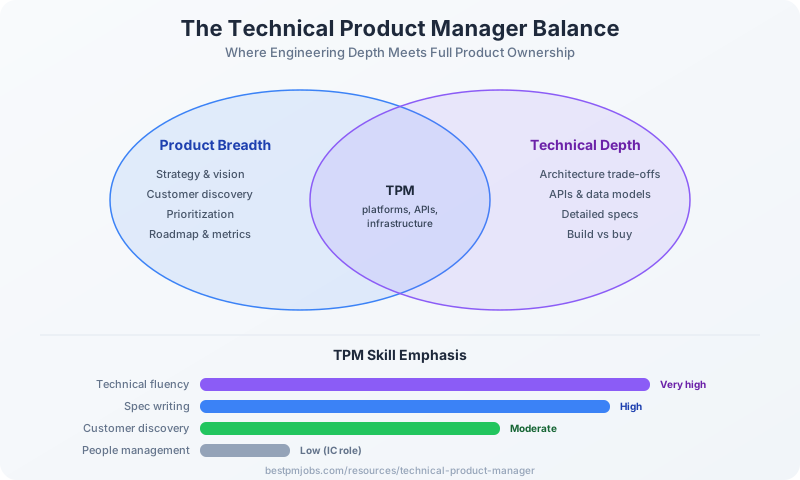
The TPM Balance: Technical Depth vs Product Breadth
A Technical PM sits where deep engineering fluency meets full product ownership, distinguishing the role from both generalist PMs and engineering managers.
What is a Technical Product Manager?
A Technical Product Manager is a product manager whose products are technically complex and whose customers are often other engineers. Instead of user-facing features, a Technical PM typically owns APIs, SDKs, developer platforms, infrastructure, or data pipelines. The role demands the same product fundamentals as any PM, plus the engineering fluency to participate credibly in architecture and build decisions.
Technical Product Manager is a specialization, not a separate rung on the ladder. A TPM can be an Associate, Senior, or Principal-level PM. For the full set of levels and how seniority maps to scope, see the PM career levels guide.
The role overlaps with adjacent specializations. A Data Product Manager focuses on data products and pipelines, and AI-focused Technical PMs work on machine-learning products covered in the AI product management guide.
What does a Technical Product Manager do?
- •Owns the strategy and roadmap for technically complex products such as APIs, SDKs, developer platforms, infrastructure, or data systems.
- •Writes detailed technical specifications and acceptance criteria that engineers can build against.
- •Evaluates architecture and build-versus-buy trade-offs with engineering leads.
- •Conducts customer discovery, often with developer or technical users, and translates needs into requirements.
- •Prioritizes the backlog by balancing customer impact, technical debt, and platform investment.
- •Defines and tracks technical metrics such as API latency, uptime, adoption, and error rates.
- •Coordinates cross-team dependencies for platform and infrastructure work.
Looking for PM jobs? Browse opportunities on bestpmjobs.com →
Technical PM vs PM vs Engineering Manager
Technical PM vs PM
Both roles own strategy and outcomes; a Technical PM goes deeper on engineering and typically owns technical products. For the full responsibilities of a technical PM role, see the Technical PM job description.
| Aspect | Technical PM | Generalist PM |
|---|---|---|
| Typical product | APIs, platforms, infrastructure | User-facing features |
| Primary customer | Often other engineers | End users and buyers |
| Technical depth | High (reads architecture) | Moderate |
| Key metrics | Latency, uptime, API adoption | Conversion, retention, revenue |
| Mid total comp | ~$210,000 | ~$202,000 |
Technical PM vs Engineering Manager
A Technical PM owns the what and why of the product; an Engineering Manager owns the how and who of execution and people. They are close partners with distinct mandates.
| Aspect | Technical PM | Engineering Manager |
|---|---|---|
| Owns | What and why (product) | How and who (execution, people) |
| Manages people | No (individual contributor) | Yes (a team of engineers) |
| Accountable for | Product outcomes and roadmap | Delivery, quality, team health |
| Background | Product plus technical fluency | Engineering plus leadership |
Required skills & qualifications
Technical fluency
Reads code, understands architecture, APIs, and data models well enough to reason about trade-offs.
Spec writing
Produces precise technical specs and acceptance criteria engineers can build against.
Product strategy
Sets direction for platform and technical products tied to business outcomes.
Prioritization
Balances customer features, technical debt, and platform investment.
Developer empathy
Conducts discovery with technical users and designs for developer experience.
Data analysis
Defines and interprets technical metrics like latency, uptime, and adoption.
Do you need to code?
Salary & compensation
A Technical Product Manager earns a national mid base salary of about $160,000 and total compensation (base plus equity plus bonus) of about $210,000 at the mid. Technical PMs often earn a premium over generalist PMs at the same level because of the specialized engineering fluency the role requires. Compensation rises sharply with seniority toward Senior and Principal levels.
| Component | Low | Mid | High |
|---|---|---|---|
| Base salary | $135,000 | $160,000 | $195,000 |
| Total compensation | $170,000 | $210,000 | $320,000 |
Location adjusts base pay. Applying the San Francisco Bay multiplier of 1.35 to the mid base lifts it to about $216,000; a Remote-US role at 1.05 gives about $168,000. For role requirements and example postings, see the Technical PM job description, and compare levels in the PM salary guide.
Looking for Technical PM roles?
Browse technical product manager openings at platform, API, and infrastructure companies.
Find PM Jobs3,591+ active PM roles · $150K+ average salary
How to become a Technical Product Manager
Build technical fluency
Develop the ability to read code, understand system architecture, and reason about APIs and data models. An engineering, computer science, or data background helps, but self-taught fluency works too.
Own a technical product area
Take responsibility for an API, platform, or infrastructure surface. Demonstrate that you can write specs engineers trust and ship technical outcomes.
Partner deeply with engineering
Earn credibility with engineering leads by participating in architecture discussions and making sound build-versus-buy trade-offs while protecting customer outcomes.
Develop product judgment
Pair technical depth with discovery, prioritization, and strategy so you ship the right technical work, not just well-built work.
Specialize and advance
Deepen into adjacent areas such as data or AI products, and progress to Senior and Principal Technical PM by demonstrating broader, higher-impact ownership.
Day in the life
A Technical PM’s day blends product and engineering work. A typical day includes an architecture review with engineering leads, writing a detailed spec for a new API endpoint, a discovery call with a developer customer, an analysis of API latency and error-rate dashboards, and backlog prioritization that weighs new features against platform debt. The TPM moves fluidly between customer outcomes and technical detail.
For a broader look at PM daily work, see the day in the life of a PM.
Frequently asked questions
What is a Technical Product Manager?
A Technical Product Manager (TPM) is a product manager who owns technically complex products such as APIs, developer platforms, infrastructure, or data systems, and partners deeply with engineering. A Technical PM combines standard product responsibilities (strategy, prioritization, customer discovery) with the technical fluency to evaluate architecture trade-offs, write detailed specs, and make build decisions alongside engineers.
What is the difference between a Technical PM and a regular PM?
A Technical Product Manager goes deeper on engineering than a generalist PM. Both own strategy, roadmaps, and customer outcomes, but a Technical PM typically owns technical products (APIs, platforms, infrastructure), reads and reasons about system design, and prioritizes work where the customer is often another engineer. A generalist PM focuses more on user-facing features and business outcomes and relies on engineers for technical depth.
Is a Technical Product Manager the same as an Engineering Manager?
No. A Technical Product Manager owns the what and the why: product strategy, prioritization, and outcomes. An Engineering Manager owns the how and the who: people management, delivery, and engineering execution for a team of developers. The TPM is usually an individual contributor focused on the product; the Engineering Manager manages engineers. They are partners, not the same role.
How much does a Technical Product Manager earn?
A Technical Product Manager earns a national mid base salary of about $160,000 and total compensation (base plus equity plus bonus) of around $210,000 at the mid. Technical PMs often command a premium over generalist PMs at the same level because of the specialized engineering fluency the role requires. Pay scales with seniority, company stage, and location.
Do you need to be able to code to be a Technical PM?
You do not need to be a professional software engineer, but a Technical Product Manager needs strong technical literacy: the ability to read code, understand system architecture, reason about APIs and data models, and have credible technical conversations with engineers. Many TPMs have engineering, computer science, or data backgrounds, but demonstrated technical fluency matters more than a specific degree.
What skills does a Technical Product Manager need?
A Technical Product Manager needs technical fluency (architecture, APIs, data), product strategy, detailed spec writing, prioritization, customer discovery (often with developer users), and strong collaboration with engineering. Comfort with technical trade-offs, system design discussions, and data analysis is essential.
How do you become a Technical Product Manager?
Common paths into Technical Product Management include moving from software engineering or data engineering into product, or starting as a generalist PM and specializing in technical products. Build technical fluency, own an API or platform area, and demonstrate that you can make sound architecture trade-offs while still delivering customer outcomes.
Is Technical PM a good career path?
Yes. Technical Product Manager is a strong, well-compensated specialization in high demand at companies building APIs, developer tools, infrastructure, and AI products. The role offers a clear progression to Senior and Principal levels and pairs naturally with adjacent specializations such as Data Product Manager and AI Product Manager.
About the Author

Aditi Chaturvedi
·Founder, Best PM JobsAditi is the founder of Best PM Jobs, helping product managers find their dream roles at top tech companies. With experience in product management and recruiting, she creates resources to help PMs level up their careers.