
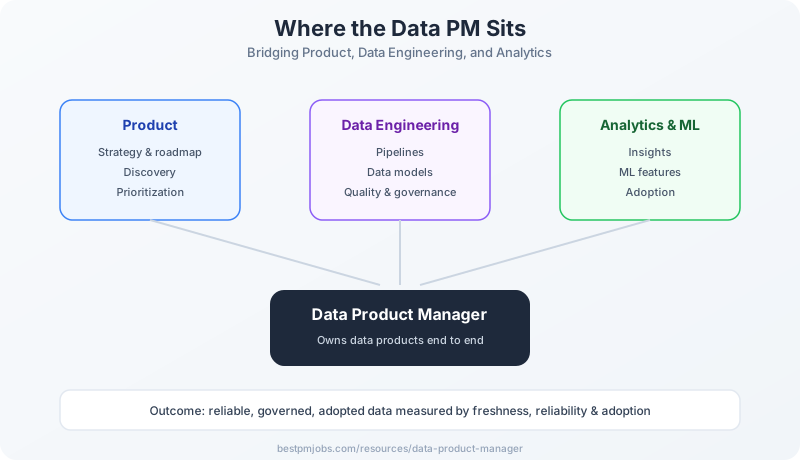
Where the Data PM Sits: Product, Data Engineering & Analytics
A Data PM bridges product strategy, data engineering, and analytics, owning data products end to end.
What is a Data Product Manager?
A Data Product Manager is a product manager whose products are made of data: pipelines that move and transform information, analytics platforms that surface insights, machine-learning features, and internal or external data-as-a-product offerings. The Data PM treats data as a product with real users, whether those users are analysts, engineers, or external customers, and is accountable for the reliability, usability, and governance of that data.
Data Product Manager is a specialization, not a separate rung on the ladder. A Data PM can be an Associate, Senior, or Principal-level PM. For the full set of levels and how seniority maps to scope, see the PM career levels guide.
The role sits close to other technical specializations. A Technical Product Manager owns platforms and APIs more broadly, while machine-learning-heavy work is covered in the AI product management guide. Many Data PMs straddle all three.
What does a Data Product Manager do?
- •Owns the strategy and roadmap for data products such as pipelines, analytics platforms, and data-as-a-product offerings.
- •Defines requirements for data engineering and data science teams and prioritizes the data backlog.
- •Treats internal and external data consumers as customers and runs discovery to understand their needs.
- •Owns data quality, freshness, lineage, and governance for the products in scope.
- •Defines and tracks data metrics such as pipeline reliability, data freshness, and analytics adoption.
- •Evaluates trade-offs between data infrastructure investment and new data features.
- •Partners with analytics and machine-learning teams to turn data into usable product capabilities.
Looking for PM jobs? Browse opportunities on bestpmjobs.com →
Data PM vs PM vs Data Analyst
Data PM vs PM
Both roles own strategy and outcomes; a Data PM specializes in data products and works deeply with data teams. For the full responsibilities of a data PM role, see the Data PM job description.
| Aspect | Data PM | Generalist PM |
|---|---|---|
| Typical product | Pipelines, analytics, data products | User-facing features |
| Primary partners | Data engineering, data science | Engineering, design |
| Core skill | SQL and data modeling | User and market insight |
| Key metrics | Freshness, reliability, adoption | Conversion, retention, revenue |
| Mid total comp | ~$210,000 | ~$202,000 |
Data PM vs Data Analyst
A Data PM owns the strategy and roadmap for data products; a Data Analyst analyzes data to answer questions and produce insights. They are partners with distinct mandates.
| Aspect | Data PM | Data Analyst |
|---|---|---|
| Owns | Data product strategy and roadmap | Analysis, insights, reporting |
| Decides | What gets built and why | How to answer a business question |
| Accountable for | Data product outcomes | Accurate, timely analysis |
| Role type | Product management | Analytics / hands-on data |
Required skills & qualifications
Data fluency (SQL)
Queries data, understands data models, and reasons about pipelines.
Product strategy
Sets direction for data products tied to business and customer outcomes.
Analytics & ML literacy
Understands how analytics and machine-learning systems create value.
Data governance
Owns data quality, lineage, privacy, and reliability for the product.
Collaboration
Works closely with data engineering, analytics, and data science teams.
Metric definition
Defines data metrics such as freshness, reliability, and adoption.
Do you need to know SQL?
Salary & compensation
A Data Product Manager earns a national mid base salary of about $160,000 and total compensation (base plus equity plus bonus) of about $210,000 at the mid. Like other technical PM specializations, data PMs frequently command a premium over generalist PMs because of the specialized data fluency the role requires. Compensation rises sharply with seniority toward Senior and Principal levels.
| Component | Low | Mid | High |
|---|---|---|---|
| Base salary | $135,000 | $160,000 | $195,000 |
| Total compensation | $170,000 | $210,000 | $320,000 |
Location adjusts base pay. Applying the San Francisco Bay multiplier of 1.35 to the mid base lifts it to about $216,000; a Remote-US role at 1.05 gives about $168,000. For role requirements and example postings, see the Data PM job description, and compare levels in the PM salary guide.
Looking for Data PM roles?
Browse data product manager openings at analytics, platform, and AI companies.
Find PM Jobs3,591+ active PM roles · $150K+ average salary
How to become a Data Product Manager
Build data fluency
Develop practical SQL skills, learn data modeling, and understand how pipelines and data warehouses work. A data analytics, data engineering, or data science background helps.
Own a data-heavy product area
Take responsibility for a pipeline, analytics surface, or data platform. Demonstrate that you can write data requirements and ship reliable data outcomes.
Partner with data teams
Build credibility with data engineering and data science by reasoning about data architecture, quality, and governance trade-offs.
Develop product judgment
Pair data depth with discovery, prioritization, and strategy so you ship the right data products, not just well-engineered pipelines.
Specialize and advance
Deepen into analytics, machine learning, or AI products, and progress to Senior and Principal Data PM by demonstrating broader, higher-impact ownership.
Day in the life
A Data PM’s day blends product, data, and engineering work. A typical day includes a pipeline reliability review with data engineering, writing requirements for a new analytics dataset, a discovery session with analysts who consume the data, an investigation of a data-quality incident, and backlog prioritization that weighs new data features against data-infrastructure investment. The Data PM moves between product outcomes and data detail throughout the day.
For a broader look at PM daily work, see the day in the life of a PM.
Frequently asked questions
What is a Data Product Manager?
A Data Product Manager is a product manager who owns data products such as data pipelines, analytics platforms, machine-learning features, internal data tools, and data-as-a-product offerings. A Data PM treats data assets as products with users and outcomes, partnering with data engineering, analytics, and data science teams to deliver reliable, well-governed, and usable data.
What is the difference between a Data PM and a regular PM?
A Data Product Manager focuses on data products and the systems that produce them, while a generalist PM focuses on user-facing application features. Both own strategy, roadmaps, and outcomes, but the Data PM works deeply with data engineering and data science, owns data quality and governance, and measures success through metrics such as data freshness, pipeline reliability, and analytics adoption.
Is a Data Product Manager the same as a Data Analyst?
No. A Data Product Manager owns the strategy and roadmap for data products and decides what gets built and why. A Data Analyst analyzes data to answer business questions and produce insights and reports. The Data PM is a product role that often partners with analysts; the analyst is a hands-on analytics role. A Data PM may use analysis to inform decisions but is accountable for product outcomes, not for producing reports.
How much does a Data Product Manager earn?
A Data Product Manager earns a national mid base salary of about $160,000 and total compensation (base plus equity plus bonus) of about $210,000 at the mid. Like other technical PM specializations, data PMs frequently command a premium over generalist PMs because of the specialized data and engineering fluency the role requires. Pay scales with seniority, company stage, and location.
What skills does a Data Product Manager need?
A Data Product Manager needs data fluency (SQL, data modeling, pipeline concepts), product strategy, an understanding of analytics and machine learning, data governance and quality awareness, and strong collaboration with data engineering and data science teams. Comfort defining data metrics and reasoning about data architecture is essential.
Do you need to know SQL to be a Data Product Manager?
Yes, practical SQL fluency is expected for most Data Product Manager roles. A Data PM should be able to query data, understand data models, and reason about pipelines. Deeper skills such as Python, statistics, or machine-learning literacy are valuable, but you do not need to be a data scientist; you need enough fluency to make sound data product decisions.
How do you become a Data Product Manager?
Common paths into Data Product Management include moving from data analytics, data engineering, or data science into product, or specializing as a generalist PM by owning data-heavy products. Build SQL and data-modeling fluency, own a data platform or pipeline area, and demonstrate that you can ship reliable, governed, and adopted data products.
Is Data Product Manager a growing role?
Yes. Data Product Manager is one of the fastest-growing PM specializations as companies invest in data platforms, analytics, and AI. Demand is strong across technology, finance, and healthcare, and the role pairs naturally with adjacent specializations such as Technical Product Manager and AI Product Manager.
About the Author

Aditi Chaturvedi
·Founder, Best PM JobsAditi is the founder of Best PM Jobs, helping product managers find their dream roles at top tech companies. With experience in product management and recruiting, she creates resources to help PMs level up their careers.